

How To Choose The Right Water Heaters In 2026
A water heater is one of those appliances that behaves perfectly until the first cold shower, leaking fitting, tripped breaker, or failed vent. Choose by real hot-water demand and installation fit, not by the biggest tank or flashiest efficiency number, and you avoid the kind of callback that starts with, “It worked fine yesterday.”
Quick Answer
Choose the heater by your household's hot-water demand and the building's actual installation constraints—not by tank gallons or UEF alone. Compare first-hour rating or maximum GPM, effective storage volume, and UEF within the same heater class, then confirm fuel or electrical service, venting, pressure-relief requirements, local code, permits, and manufacturer instructions. In an old gas closet or a tight utility space, the heater that fits and can be safely serviced is the right heater, even if another unit looks better on paper.
Table of Contents
Our Top Picks
Affiliate disclosure: if you buy through these links, we may earn a commission at no extra cost to you.


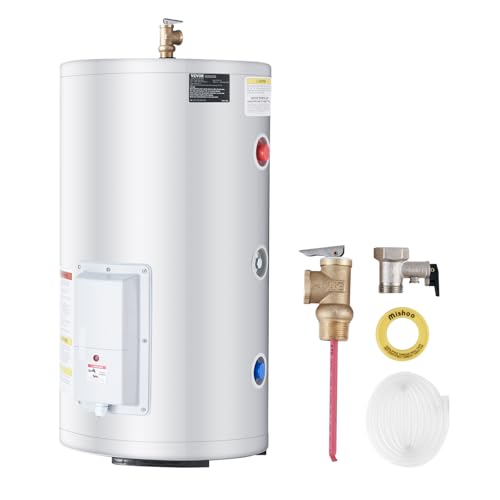
Size the Heater to Real Hot-Water Demand
I start with the busiest hour, not the number of people written on the lease. Write down what can run at the same time: two showers, a kitchen faucet, the dishwasher, or a clothes washer. A low-flow shower head can reduce demand, but a clogged shower head, restricted faucet aerator, or weak mixing valve should never be used to disguise an undersized heater. A toilet fill valve normally uses cold water, so a toilet that fills slowly is not automatically a water-heater problem.
For a storage heater, pay attention to the first-hour rating. That figure is more useful than the tank's gallon label because it reflects the hot water available during the first hour, including the heater's ability to recover. For a flow-activated or instantaneous heater, look at maximum GPM and whether it can maintain the required temperature during simultaneous draws.
The DOE's draw-pattern method is useful here because it represents the frequency and duration of hot-water draws during a simulated 24-hour period. The draw pattern is tied to first-hour rating for non-flow-activated heaters and maximum GPM for flow-activated heaters. Also check effective storage volume, especially on high-temperature storage models. Rated gallons alone can misrepresent capacity when the unit stores water above the nominal 125-degree test temperature; effective storage volume adjusts for that difference in stored thermal energy.
Match the Heater Type to the House
The main categories are storage, instantaneous, and heat-pump water heaters. A storage unit keeps a reserve of heated water. An instantaneous, often called tankless, unit heats water as it moves through the heater. A heat-pump unit uses a different electric heating method and brings its own requirements for location, airflow, electrical service, and condensate handling. The right category depends on the house and the utility setup, not on which type has the loudest sales pitch.
Storage heaters are often the straightforward choice when the existing fuel, venting, piping, and service access already work. An instantaneous unit can be a good fit when its maximum GPM covers the actual simultaneous demand, but “endless hot water” is not the same as unlimited flow. Two showers, a kitchen faucet, and a restrictive whole-house water filter can expose a flow problem quickly. A heat-pump heater may offer a strong efficiency case, but only when the installation space and electrical system meet the manufacturer's requirements.
Changing fuel is not a simple box swap. Replacing gas with electric can require different electrical capacity and a new approach to the old vent opening. Replacing one gas heater with another still requires the correct gas connection, venting, clearances, and combustion-air arrangement. A unit that fits the old footprint may not fit the old installation rules. If the heater lives in a cramped closet, the ability to inspect, drain, and service it matters just as much as the recovery rate.
Read UEF and Capacity Labels Together
Uniform Energy Factor, or UEF, is an efficiency measure. It is not a guarantee of how much hot water the unit can deliver at one time. Compare UEF within the same heater class and similar delivery profile, then compare first-hour rating, effective storage volume, or maximum GPM separately. Instantaneous heaters can show a higher UEF partly because they generally have lower standby losses, but that does not prove they will deliver more hot water to a busy household.
The DOE's proposed rulemaking identifies current UEF-based federal standards in 10 CFR 430.32(d). Its examples include UEF values from 0.80 to 0.81 for certain instantaneous gas units under two gallons and above 50,000 Btu/h, and values from 0.91 to 0.92 for certain instantaneous electric units under two gallons, depending on the draw pattern. Those numbers are useful only when the units are being compared within the same test category. Comparing a small instantaneous electric heater to a gas storage heater by UEF alone is how people end up with a very efficient heater that cannot keep up.
There is an important 2026 detail: manufacturers have been required to meet federal energy-conservation standards for consumer water heaters since 1990, but the DOE document often discussed in connection with future changes is a 2023 notice of proposed rulemaking, not a final rule. The proposed standards would apply to covered heaters manufactured in or imported into the United States five years after publication of a final rule. Do not treat a proposal as today's installation code.
If you are considering a very large electric storage heater, read the grid-enabled language carefully. The DOE definition applies to electric-resistance units with more than 75 gallons of rated storage, an activation lock, and a permanent warning label stating that the heater may not provide adequate hot water unless it is enrolled in and activated by a utility or demand-response program.
Verify Installation Fit Before You Commit
Before ordering anything, verify the existing heater type, fuel, venting, gas or electrical connections, shutoff location, pressure-relief valve and discharge path, leaks, drain route, pan requirements, clearances, and service access. Confirm permit requirements with the local building department, then check the manufacturer instructions and reputable plumbing or gas-safety guidance. A matching height and diameter do not prove that the replacement is legal or safe.
This is where the right plumbing tools earn their keep. A full-size pipe wrench and a backup wrench are worth having when an old steel nipple or union is seized, but never twist against a thin tank nipple and hope it survives. Use pipe fittings that match the pipe material, thread, and approved transition method. Cheap universal adapters and bargain flex connectors are where callbacks breed. For PEX, use a crimp, clamp, or expansion tool made for that connection system instead of forcing a borrowed tool to work. For copper, a proper soldering kit, clean cuts, deburring, and correct flux matter; never put an open flame around combustible vapors or use a torch as an excuse to improvise around the relief valve or venting.
Also separate a water-heater problem from a fixture problem. A clogged shower head, faucet cartridge, restricted water filter, or cold-water crossover can make the water seem inadequate even when the heater is correctly sized. A drain cleaner is the wrong tool for a hot-water complaint, and a toilet fill problem usually belongs to the cold-water side. If the heater drains into a sump pit, verify that the discharge arrangement meets local requirements and will not overwhelm the sump pump during service.
Plan for Service Life and the Ugly Day
The DOE's analysis estimates an average lifetime of approximately 15 years for storage water heaters and 20 years for instantaneous water heaters. Those are planning figures, not promises. Water chemistry, installation quality, maintenance, cycling, and access to replacement parts all affect what happens after the warranty papers are filed away.
Efficiency should be considered over the unit's service life, but modeled savings are not guarantees for every house. In the DOE's 2022-dollar analysis, affected electric storage heaters with 20 to 55 gallons of effective storage volume were estimated to provide average life-cycle-cost savings of about $1,868 with a 3.0-year simple payback. Units over 55 and up to 120 gallons were estimated at about $501 in savings with a 0.2-year payback. Those figures describe an analysis of affected units, not a promise that a larger or more efficient heater will lower every household's bill.
Serviceability is the part nobody thinks about while the old heater is still working. Leave room for a technician to reach the controls, connections, drain, and relief valve. Confirm that replacement elements, controls, valves, and manufacturer-approved parts are available in your area. Before removal, photograph the nameplate, pipe routing, vent connection, shutoffs, and wiring, and keep the installation manual with the house records. A high-UEF heater that nobody can safely access or repair is not a bargain when it fails on a Sunday morning.
Frequently Asked Questions
Should I choose a water heater by gallon capacity?
No. Use household peak demand, first-hour rating, maximum GPM, and effective storage volume. Gallons are useful background information, but they do not describe the whole delivery picture.
Does a higher UEF always mean the heater is better?
No. Compare UEF within the same heater class and delivery profile. A higher UEF may reflect lower standby losses without providing the flow or first-hour capacity your household needs.
Are tankless water heaters always better than storage tanks?
No. Tankless units must meet the required maximum GPM during simultaneous draws and may require different gas, electrical, venting, or water-flow arrangements. A storage heater can be the better fit when the existing installation and demand favor a reserve tank.
Can I replace a gas water heater with an electric model?
Only after confirming electrical capacity, wiring, clearances, vent treatment, permits, local code, and the manufacturer's instructions. A fuel change is an installation redesign, not just a different appliance choice.
Do I need a permit to replace a water heater?
Permit requirements vary by jurisdiction and by the work involved. Check with the local building department before touching the existing unit, especially when gas piping, venting, electrical service, or relocation is involved.
What if the new heater is correctly sized but the hot water still seems weak?
Check the shower head, faucet cartridge, mixing valve, whole-house water filter, inlet restrictions, and possible cold-water crossover before blaming the heater. A toilet repair or drain cleaner will not solve a hot-water delivery problem.
Bottom line: Choose the heater in this order: identify the busiest hot-water demand, compare the correct delivery metric, select a type that matches the house, compare UEF within the same class, and verify fuel, venting, code, permits, relief protection, access, and serviceability. Your next step is to photograph the existing heater and write down its nameplate, fuel, vent, connections, and busiest-hour usage, then review that information with the local building department or a qualified plumber before ordering. That small bit of homework beats wrestling a new tank into the wrong hole.


