

How To Select The Right Faucets For Kitchen
A kitchen faucet has to work with the sink, the plumbing, and the way you actually use the kitchen. Choose the wrong height, reach, mounting style, or control layout, and you can end up with constant splashing, awkward rinsing, mineral buildup, or a faucet that does not fit the existing holes at all.
Quick Answer
Start by measuring the sink's mounting holes, center-to-center spacing, depth, and width before choosing a faucet style. Match the mounting type to the existing plumbing, then select controls and spray functions that fit your daily workflow. Finally, compare spout height and reach with the sink depth and choose a material and finish you are prepared to maintain.
Table of Contents
- Quick Answer
- Our Top Picks
- Measure the Sink Before Choosing the Faucet
- Match the Mounting Style to the Plumbing
- Choose Controls and Spray Functions for the Work
- Balance Spout Height, Reach, and Sink Depth
- Treat Material and Finish as Long-Term Decisions
- Check the Whole Installation Before Committing
- Frequently Asked Questions
- Sources & References
Our Top Picks
Affiliate disclosure: if you buy through these links, we may earn a commission at no extra cost to you.
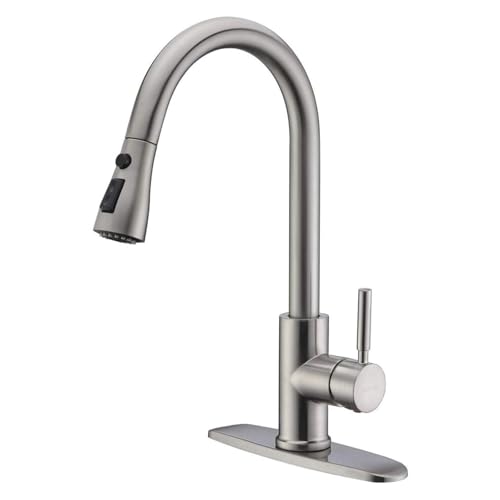
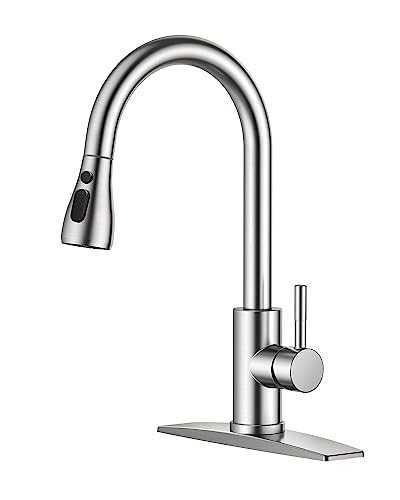

Measure the Sink Before Choosing the Faucet
The first mistake I see is choosing a faucet by the handle shape or finish, then discovering that it does not match the sink. Count the mounting holes and measure the center-to-center spacing between them. Also record the sink depth and width. Those measurements narrow down what will physically fit before you spend time worrying about style.
Sink size matters because faucet height and reach have to work with the basin. A deep, wide sink can usually tolerate a different spout proportion than a shallow or narrow one. If the spout is too short, the water may land too close to the back of the basin. If it is too tall for a shallow sink, splashing can become part of your daily routine.
Measure around the sink, not just underneath it. Note where the backsplash, cabinets, window trim, soap dispenser, water filter, or other countertop equipment sits. A faucet can fit the mounting holes and still be a poor choice if the handle or spray head has nowhere to move comfortably.
Match the Mounting Style to the Plumbing
There are two primary mounting styles to account for: deck-mounted and wall-mounted. A deck-mounted faucet installs on the sink or countertop. A wall-mounted faucet attaches to the wall above the sink. The existing plumbing has to be compatible with the mounting style you select.
That sounds obvious, but this is where a simple replacement can turn into a much larger plumbing job. A wall-mounted faucet is not a direct substitute for a deck-mounted faucet just because the spout reaches the same area. If the water connections are not positioned for the new mounting arrangement, the wall or countertop may need to be opened and rebuilt.
Do not treat pipe fittings as magic adapters that make every mismatch disappear. The same rule applies to PEX tools and soldering kits: use the connection method that suits the existing plumbing and the selected installation, rather than grabbing a tool because it is already in the truck. If the mounting arrangement is unclear, confirm it before removing the old faucet.
Choose Controls and Spray Functions for the Work
Single-handle and double-handle faucets solve different workflow problems. A single-handle faucet uses one control and is convenient when space is tight or when you want to adjust water quickly. A double-handle faucet controls hot and cold separately, giving you more precise temperature adjustment.
Think about what your hands are doing during the busiest part of the day. If you are rinsing vegetables, washing dishes, and moving between the faucet and a cutting board, a detachable spray head can make the job easier. Pull-down and pull-out faucets both provide that flexibility for rinsing ingredients and cleaning the sink or dishes.
Touchless faucets use motion-sensor technology so you can operate the water without touching a handle. That can be useful when your hands are covered with food or grease. A pot filler, on the other hand, is installed near the stove to help fill large pots. It serves a specific task and should be considered alongside the sink faucet, not confused with it.
Balance Spout Height, Reach, and Sink Depth
Spout height and reach must be evaluated together with sink depth. A faucet that looks perfectly proportioned on a display counter may sit awkwardly over your basin. The goal is to place the water where you work without creating unnecessary splash or forcing you to wash everything against one side of the sink.
Reach is especially important in a wide sink or a divided basin. A short spout may leave part of the basin inconvenient to use. A long spout can improve coverage, but only when its height and landing point make sense for the sink. This is a scale and proportion decision, not simply a matter of choosing the biggest faucet available.
Spray-head flexibility matters here as well. A pull-down or pull-out head is useful only if it can reach the ingredients, dishes, and basin areas you actually need to rinse. A shower head aimed at the wrong part of the tub only soaks the curtain; a faucet spray head that does not suit the sink creates the same kind of daily aggravation.
Treat Material and Finish as Long-Term Decisions
Material and finish are not just color choices. They affect durability, maintenance, how the faucet ages, and how well it stands up to splashes, mineral buildup, and heavy use. Solid bronze and plated materials have different ownership considerations, so do not assume that one description tells you everything about long-term performance.
Some finishes are designed to change naturally over time. A living finish may develop a different appearance as it ages, which can be attractive if you expect it and frustrating if you do not. Decide whether you want a finish that keeps a consistent appearance or one whose character changes with use.
Coordinate the faucet with the hardware already in the kitchen, but do not let matching color outrank practical maintenance. The finish should suit the sink area, the amount of cleaning it receives, and the mineral conditions you routinely see. A water filter may address part of your kitchen setup, but it does not eliminate the need to care for the faucet finish itself.
Check the Whole Installation Before Committing
Before you commit to a faucet, walk through the installation as if you were already under the sink. Confirm the mounting holes, mounting style, sink dimensions, spout geometry, control movement, spray-head reach, and plumbing compatibility. This is the same discipline I use whether I am working on a faucet, toilet, water heater, shower head, or water filter: confirm the existing setup before forcing a new part into it.
Use the right plumbing tools for the job. A pipe wrench earns its keep on suitable threaded pipe, but it is not a reason to bully a faucet's retaining hardware or damage a finished surface. Pipe fittings should match the existing connections, and PEX tools or soldering kits should be used only when that installation method is appropriate. The cheapest tool or fitting is often the one that turns a straightforward repair into a leak hunt.
Separate faucet problems from drain problems. If the sink drains slowly, drain cleaner is not a substitute for diagnosing the drain, and changing the faucet will not correct a restriction downstream. Likewise, a sump pump in the basement or a water heater elsewhere in the house may be important to the home's plumbing system, but neither should influence the faucet choice more than the sink layout and actual kitchen workflow.
Frequently Asked Questions
What measurements do I need before selecting a kitchen faucet?
Measure the number of mounting holes, the center-to-center spacing, the sink depth, and the sink width. Also consider the available space around the faucet for the handle and spray head.
Can I replace a deck-mounted faucet with a wall-mounted faucet?
Only if the existing plumbing and mounting location are compatible with the wall-mounted installation. The two mounting styles use different installation arrangements, so this may require plumbing and surface changes.
Is a single-handle or double-handle faucet better?
A single-handle faucet is convenient, especially where space is limited. A double-handle faucet gives separate hot and cold control for more precise temperature adjustment.
What is the practical advantage of a pull-down or pull-out faucet?
Both use a detachable spray head that gives you more flexibility when rinsing ingredients, cleaning dishes, and washing the sink area. Choose the arrangement that works naturally with your sink size and kitchen layout.
When does a touchless faucet make sense?
A touchless faucet can be useful when you often operate the water with messy hands because motion-sensor technology reduces the need to touch a handle. Make sure the sensor arrangement suits the sink area and your normal workflow.
How should I choose between faucet materials and finishes?
Consider durability, mineral buildup, maintenance, natural aging, and coordination with existing hardware. Solid bronze, plated materials, and living finishes can have different care and appearance expectations.
Choose the faucet in this order: verify the sink measurements, match the mounting style to the plumbing, select controls and spray functions for the way you work, check spout height and reach against the sink depth, and then choose a material and finish you can live with and maintain. Your next step is simple: measure the sink and mounting holes, record the numbers, and inspect the plumbing connection before you order anything. That small bit of preparation is what keeps a faucet replacement from becoming the next pipe nightmare.


