

Faucets vs Pipe Wrenches: Which Should You Buy in 2026
Faucets vs Pipe Wrenches: Which Should You Buy in 2026
By Mike Hargrove
Let’s clear up the biggest mistake in this comparison: a faucet and a pipe wrench are not substitutes. A faucet is the fixture that delivers and controls water. A pipe wrench is the tool used to grip threaded pipe and fittings. Comparing them is a little like comparing a tire to a lug wrench. One becomes part of the finished job. The other helps you survive the job.
This comparison is for homeowners building a plumbing tool kit, replacing a kitchen or bathroom fixture, or trying to decide what belongs in the cart before the water gets shut off. The Amazon products listed here are useful shopping examples, not a verified ranking of long-term quality. The available testing supports clear conclusions about faucet access, pipe-wrench sizing, and aluminum versus iron construction, but it does not prove that every listed Amazon model will perform the same way.
Affiliate disclosure: if you buy through these links, we may earn a commission at no extra cost to you.
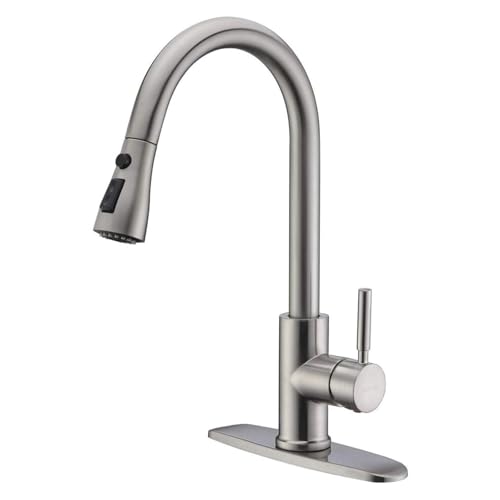

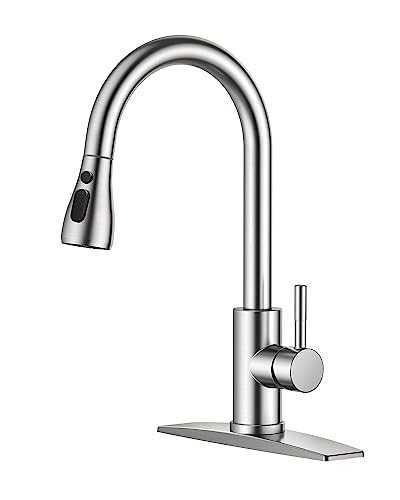
Table of Contents
- Our Top Picks
- Quick Verdict
- About Faucets
- About Pipe Wrenches
- Head-to-Head: The Job You’re Actually Solving
- Head-to-Head: Access and Control
- Head-to-Head: Durability and Failure Points
- Head-to-Head: Value and Buying Strategy
- Who Should Choose Faucets?
- Who Should Choose Pipe Wrenches?
- Our Verdict
- Frequently Asked Questions
- Sources & References
Our Top Picks
Affiliate disclosure: if you buy through these links, we may earn a commission at no extra cost to you.
Quick Verdict
Choose Faucets if...
- You are replacing a leaking, outdated, or damaged kitchen or bathroom fixture.
- You need a specific sink format, such as a pull-down kitchen faucet or a four-inch centerset bathroom faucet.
- Your priority is water delivery, sink compatibility, reach, and finished appearance—not pipe repair.
Choose Pipe Wrenches if...
- You need a reusable tool for threaded pipe, fittings, valves, or household plumbing repairs.
- You are building a basic plumbing kit and want one useful starting size.
- You regularly work on overhead lines or larger pipe and need to balance weight against maximum rigidity.
| Factor | Faucets | Pipe Wrenches |
|---|---|---|
| Price Range | No defensible numeric range is provided here; current cost varies by model, finish, cartridge, and included hardware. | No fixed numeric range is provided here; cost varies by wrench size, number of pieces, and aluminum versus iron construction. |
| Best For | Replacing or installing a kitchen or bathroom water fixture. | Loosening and tightening threaded pipe and plumbing fittings. |
| Setup Difficulty | Moderate. Sink-hole layout, clearance, mounting, supply connections, and leak testing all matter. | Low for basic use, but choosing the wrong size or forcing a stuck joint can create a much bigger repair. |
| Reliability | Depends on the cartridge, seals, mounting hardware, installation, and availability of service parts. The supplied data does not rank the listed faucets. | Depends on jaw quality, adjustment threads, handle rigidity, and correct sizing. Aluminum is lighter; iron or ductile iron is more rigid under heavy load. |
| Key Advantage | It solves the actual fixture problem and gives you the water flow, control, reach, and appearance you want at the sink. | It delivers mechanical grip and leverage on threaded plumbing that ordinary household pliers may not handle. |
| Main Drawback | A good-looking faucet can still be a headache if the hole pattern, mounting hardware, or internal parts are wrong for the job. | It is heavy and potentially damaging on finished surfaces. It is the wrong tool for gripping a polished faucet body or decorative nut. |
About Faucets
A faucet earns its place when the problem is at the sink. The WEWE High-Arc Pull-Down Kitchen Faucet, Brushed Ni, and the FORIOUS Kitchen Faucets Pull Down Sprayer are kitchen-style options aimed at buyers who want a pull-down spray arrangement. The Bathroom Faucet, Hurran 4 inch Centerset 2-Handle is a different animal: its four-inch centerset format is a fit clue for a particular bathroom sink layout. Those titles tell you something about intended use, but they do not prove how well the cartridge, mounting hardware, or supply connections will hold up.
Before buying any faucet, measure the sink and count the holes. Check the space above and below the counter, the spout reach, the supply-line arrangement, and whether the mounting hardware can actually be tightened in the space available. A beautiful brushed finish will not rescue a faucet that does not cover the old holes or leaves the handle hard against the backsplash. Cheap fixtures commonly turn into repeat work through flimsy mounting hardware, poor seals, or service parts that are difficult to identify. If a listing says plenty about the finish but little about replacement cartridges, warranty coverage, or the mounting system, treat that as a yellow flag.
Faucet work is often less about brute force and more about access. SpruceRank reports installing and removing 22 faucets during 85 hours of testing. Its testing lists the RIDGID 57003 EZ Change as an 8-in-1 faucet tool with a spring-loaded quick-adjust mechanism, hardened-steel construction, and a jaw capacity from 3/8 inch to 1-1/4 inches. The compact head reached under-sink areas around garbage-disposal brackets and supply lines without removing those obstacles, while one-handed operation allowed the user to hold the faucet in place while tightening the mounting nut. SpruceRank also reported removing corroded faucet locknuts in under two minutes with the tool, compared with more than 10 minutes using adjustable wrenches.
About Pipe Wrenches
A pipe wrench is a working tool, not a finished fixture. Its job is to bite into threaded pipe and fittings and give you enough leverage to break loose a joint or tighten one properly. Use it where the surface is meant to be gripped. Put it on a polished faucet body, chrome nut, or decorative valve and you may trade a five-minute repair for a permanent set of jaw marks.
For most homeowners, size matters more than the badge on the handle. PlumbingToolsReview tested five pipe wrenches over three weeks on copper, steel, and iron pipe during domestic plumbing tasks. Its recommended starting option, the 12-inch RIDGID 31015, is described as drop-forged steel with a lifetime warranty and a 1.5-inch capacity for most residential fittings. That is the sensible starting point for a general household kit: useful leverage without carrying a full rack of oversized tools.
The size trade-offs are straightforward. The compact 10-inch RIDGID 31010 is intended for tight spaces. The 18-inch RIDGID 31100 is positioned for larger pipe. TradesProHub describes the 14-inch RIDGID 31020 as a USA-made ductile-iron wrench with an I-beam handle, self-cleaning adjusting threads, and replacement jaws available. The 14-inch RIDGID 31095 aluminum wrench uses hardened-steel jaws. TradesProHub says it keeps the grip of the iron version while being about 40 percent lighter and suitable for roughly 95 percent of residential plumbing work, although it is less rigid under maximum torque.
The Amazon options reflect the same sizing decision. The KARRYTON Aluminum Pipe Wrench Set covers 10, 14, 18, and 24 inches. The DURATECH 3-Piece Aluminum Straight Pipe Wrench Set offers several sizes, while the 5-Piece Heavy Duty Pipe Wrench Set lists 8, 10, 12, and 14-inch sizes. A set can make sense if you work on different pipe sizes, but a higher piece count is not automatically proof of better jaws, smoother threads, or a stronger handle. Inspect the adjustment action and jaw engagement before trusting any set on a badly seized joint.
Head-to-Head: The Job You’re Actually Solving
If water is leaking from the faucet body, the cartridge is worn, or the fixture is simply due for replacement, a pipe wrench cannot solve that problem. You need a faucet that matches the sink and the water connections. A pipe wrench might be part of the larger repair if threaded plumbing upstream is involved, but it is not the replacement fixture.
If the problem is a threaded fitting that will not move, a new faucet is irrelevant. You need grip, leverage, access, and enough control not to twist the pipe inside the wall. That is where a properly sized pipe wrench earns its keep. Buying the wrong category because it is cheaper or more attractive is how simple plumbing work becomes an emergency call.
Head-to-Head: Access and Control
Faucet work is usually cramped, upside down, and performed with your shoulder wedged against a cabinet wall. The important question is whether the faucet’s mounting system can be reached and tightened without damaging the sink or losing control of the fixture. This is why a dedicated faucet tool can outperform a general adjustable wrench under the sink. The RIDGID 57003’s compact head and one-handed adjustment are designed for precisely that kind of access problem.
Pipe-wrench access is about choosing a tool that fits both the pipe and the working room. A 10-inch wrench can be easier to place in a tight cabinet or around smaller fittings. An 18-inch wrench gives more leverage and is aimed at larger pipe, but it also needs more room to swing. For overhead or all-day residential work, the lighter aluminum style can reduce fatigue. When the joint is heavily seized or maximum rigidity matters, the heavier iron or ductile-iron style has the advantage.
Head-to-Head: Durability and Failure Points
A faucet’s weak points are usually hidden after installation. The cartridge, seals, mounting hardware, spray hose, and supply connections all matter more than a showroom finish. The available research does not establish a durability ranking for the WEWE, FORIOUS, or Hurran listings, so I would not promise that one of them will outlast the others. Buy the correct configuration, look for serviceable parts, and do not let a low price excuse vague specifications.
With a pipe wrench, you can inspect much of what matters before starting work. The jaws should engage cleanly, the adjustment should move without gritty binding, and the handle should not feel soft or flexible when loaded. The RIDGID 31020 is the heavy-duty direction: ductile iron, an I-beam handle, self-cleaning threads, and replacement jaws. The RIDGID 31095 takes the lighter direction with hardened-steel jaws and substantially less weight, but TradesProHub notes the aluminum body is less rigid at maximum torque. Neither is automatically better for every job.
Head-to-Head: Value and Buying Strategy
A faucet is worth the money when it matches the sink and prevents you from repeating the installation. Do not compare only the fixture price. Factor in whether the mounting hardware is usable, whether the supply lines reach, and whether you will need a dedicated faucet tool to remove the old locknut. The cheapest listing can become expensive if you have to replace it because the layout was wrong or the mounting hardware will not stay tight.
A pipe wrench is a more reusable purchase. If you do occasional household plumbing, one solid 12-inch wrench is usually a more sensible starting point than a large set of tools you rarely lift. If you work across different pipe sizes, an aluminum set such as the KARRYTON or DURATECH options may provide useful coverage. If your work involves stubborn joints, heavy pipe, or maximum leverage, step toward the heavier style instead of assuming a lightweight set will do everything.
Who Should Choose Faucets?
Choose faucets when you are replacing the fixture itself. Kitchen buyers should compare pull-down models such as the WEWE High-Arc Pull-Down Kitchen Faucet, Brushed Ni, and the FORIOUS Kitchen Faucets Pull Down Sprayer against their sink layout, spout reach, and under-sink clearance. Bathroom buyers looking at the Hurran 4 inch Centerset 2-Handle should confirm that the sink uses the matching four-inch centerset arrangement. Do not buy based on finish alone. Measure first, then check the mounting system and the parts you may need to service later.
If you are doing the installation yourself, plan for the removal tool as well as the new fixture. When the old locknut is corroded or boxed in around supply lines and disposal hardware, the under-sink access can be more difficult than the faucet selection. A dedicated faucet tool is often a better answer than trying to force a large pipe wrench into a space it was never designed to enter.
Who Should Choose Pipe Wrenches?
Choose pipe wrenches when you need to work on threaded pipe, fittings, valves, or older plumbing that has not been disturbed in years. For a general-purpose household tool kit, the 12-inch RIDGID 31015 is the logical benchmark from the available testing: drop-forged steel, a lifetime warranty, and a 1.5-inch capacity described as suitable for most residential fittings.
Move smaller when cabinet access is the main problem, using the 10-inch size as the compact reference. Move larger when the pipe and fitting demand it, with the 18-inch class aimed at larger pipe. Choose aluminum for lower weight during overhead or all-day residential work. Choose iron or ductile iron when rigidity and maximum torque matter more than your shoulders at the end of the day.
Our Verdict
Here is the blunt answer: faucets and pipe wrenches are not competing products. If your sink needs a new fixture, buy the faucet that matches the sink and add the right faucet tool for the installation. Do not use a pipe wrench on the finished faucet and expect the chrome to forgive you. If you are building a general plumbing kit and have no immediate fixture replacement, buy a solid 12-inch pipe wrench first. It is the more reusable purchase, and the available testing supports that size as the practical starting point for most residential work.
For most homeowners, the smartest 2026 setup is not “faucet or pipe wrench.” It is the correct faucet for the fixture plus one properly sized wrench for the threaded plumbing around it. Buy the fixture for the water and the wrench for the pipe. Keep each tool on the surfaces it was built to handle, and you will avoid a lot of the pipe nightmares that start with using the wrong tool in a dark cabinet.
Frequently Asked Questions
Are faucets and pipe wrenches alternatives?
No. A faucet is a plumbing fixture, while a pipe wrench is a repair and installation tool. A new faucet cannot loosen a seized threaded fitting, and a pipe wrench cannot replace the faucet delivering water at the sink.
Can I use a pipe wrench to install a faucet?
Not on the finished faucet body or decorative hardware. Pipe-wrench jaws are made to bite into pipe, and that grip can mark or damage finished surfaces. For the mounting nut under a sink, a dedicated faucet or basin tool is the better choice. SpruceRank’s testing found the RIDGID 57003 EZ Change especially useful in tight areas around supply lines and disposal brackets.
What size pipe wrench should a homeowner buy first?
A 12-inch model is the most practical starting point for a general household kit. PlumbingToolsReview recommends the 12-inch RIDGID 31015, describing it as suitable for most residential fittings up to a 1.5-inch capacity. Add a 10-inch model when tight access is the problem, or an 18-inch model when you regularly work on larger pipe.
Are aluminum pipe wrenches strong enough for residential plumbing?
They can be. TradesProHub reports that the RIDGID 31095 aluminum wrench is about 40 percent lighter than the comparable iron wrench and is suitable for roughly 95 percent of residential plumbing work. The trade-off is rigidity: aluminum is less rigid under maximum torque. Use heavier iron or ductile iron when a seized joint or larger pipe demands maximum stiffness.
Which faucet from the listed options should I buy?
Match the faucet to the sink before comparing finishes. The WEWE High-Arc Pull-Down Kitchen Faucet and FORIOUS Kitchen Faucets Pull Down Sprayer are kitchen-oriented examples. The Hurran 4 inch Centerset 2-Handle is aimed at a four-inch centerset bathroom layout. The supplied information does not provide enough verified durability testing to call one of those exact listings the universal winner.


