

How To Choose The Right A Pipe Wrench Set
Selecting the right pipe wrench involves choosing a style suited to the specific task. Options include straight or RapidGrip wrenches for general work, end wrenches for tight wall spaces, offset wrenches for awkward angles, compound leverage wrenches for seized joints, chain wrenches for extremely tight areas, and strap wrenches for polished or plastic pipes. For proper operation, ensure the wrench size matches the workpiece to avoid damage or failure.
Quick Answer
Selecting the right pipe wrench depends on the specific job requirements. Different styles serve unique purposes: straight or rapid grip wrenches work for general pipe work, while end wrenches are suitable for parallel work near walls. Offset wrenches provide access to tight spots, compound leverage wrenches assist with seized joints, chain wrenches are ideal for extremely tight spaces, and strap wrenches may be used for plastic or plated pipe. Choosing the correct size for the workpiece is also essential.
Table of Contents
Our Top Picks
Affiliate disclosure: if you buy through these links, we may earn a commission at no extra cost to you.


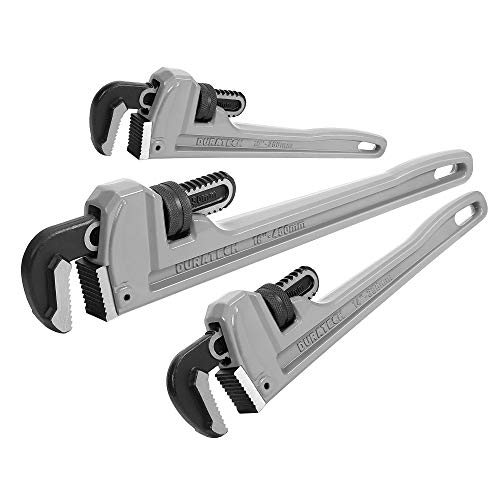
Selecting the Right Wrench Style for the Task
When choosing a wrench for specific pipe work, the selection depends on the physical constraints of the environment and the nature of the joint. For general applications involving various forms of pipe work, straight or RAPIDGRIP pipe wrenches may be suitable. If the task requires working in close proximity to a wall or involves parallel work, an end pipe wrench might provide the necessary grip. For situations where access is limited, an offset wrench can be selected to allow for entry into tight spots or to manage awkward angles. When dealing with seized joints, a compound leverage wrench may be used because it is designed to multiply leverage. Selecting the correct style involves evaluating whether the workspace is open or confined, whether the work is parallel to a surface, and whether the joint requires additional force. By matching the specific design of the tool to the geometry of the pipe or the constraints of the installation site, the user can select a wrench that addresses the unique requirements of the task. Each style offers different functional advantages, such as easier entry into cramped spaces or increased leverage for difficult connections, making the choice dependent on the specific task at hand.
Matching Wrench Size to Pipe Diameter
When selecting a wrench size, the diameter of the pipe being worked on determines the appropriate tool size. For instance, a 6-inch wrench may be used for pipe diameters ranging from 1/8 inch to 1/2 inch. A larger 8-inch wrench can accommodate diameters between 1/4 inch and 3/4 inch. Moving up to a 10-inch wrench allows for a range of 1/4 inch to 1 inch, while a 12-inch wrench covers 1/2 inch to 1 1/2 inches. For larger applications, a 14-inch wrench handles 1/2 inch to 1 1/2 inch diameters, and an 18-inch wrench is suitable for 1 inch to 2 inches. A 24-inch wrench can be used for 1 1/2 inches to 2 1/2 inches. For very large pipes, a 36-inch wrench fits 2 inches to 3 1/2 inches, a 48-inch wrench fits 3 inches to 5 inches, and a 60-inch wrench accommodates 3 inches to 8 inches. Selecting the correct size ensures the tool matches the workpiece. Using a wrench that is too small for the workpiece is a consideration to avoid when matching the tool to the specific pipe diameter being serviced.
Proper Mounting and Gripping Techniques
To achieve effective gripping with a pipe wrench, a gap should be maintained between the shank of the hook jaw and the pipe. This space allows the pressure from the heel jaw and the hook jaw teeth to work together to produce the necessary gripping action. If the back of the hook jaw makes contact with the pipe, the gripping action may be reduced, which could lead to the wrench slipping or the hook jaw failing. For maximum grip and turning force, a gap of approximately 1/2 inch (12mm) between the back of the hook jaw and the workpiece is recommended. When using a RapidGrip wrench, the workpiece should be centered within the “v” of the hook. If the workpiece does not make contact with both sides of the “v,” the gripping action could be reduced, and the hook might fail. Maintaining these specific distances and alignments ensures that the pressure is distributed correctly between the two gripping points. Proper mounting requires that the user avoids letting the shank touch the pipe to prevent loss of traction or mechanical failure. Following these principles helps ensure the tool functions as intended during use on a workpiece.
Avoiding Improper Use and Safety Risks
To avoid injury or tool failure, users should avoid several improper practices when operating a pipe wrench. One should not use a cheater, which is a pipe slipped over the handle to increase leverage, as this may cause the handle to bend or break and could slip off during use. If more leverage may be needed, a larger wrench should be used instead. Additionally, the wrench should not be used as a hammer, as it is designed specifically to turn pipe. If a handle becomes bent or twisted, it indicates the tool has been overloaded; such handles should never be straightened and the wrench should be taken out of service. Selecting the correct size is also vital for safety. Using a wrench that is too large may damage the workpiece, while using a wrench beyond its capacity could lead to failure. When selecting a size, ensure the nut is not positioned at the very end of the hook jaw. Following these principles helps prevent the serious injury that can result from the misuse or abuse of a pipe wrench. Always ensure the tool is used according to its intended design to maintain safety and prevent tool damage.
Maintenance and Inspection Procedures
Regular inspection can help to identify damaged or worn parts on a pipe wrench. For straight, rapid grip, end, offset, and compound wrenches, use a wire brush to clean the teeth. Dirt within the hook or heel jaw might cause the tool to slip. If teeth are worn or damaged, the jaws should be replaced to prevent slipping or jaw failure. If the ratchet action does not function normally, examine the spring assembly and replace it if necessary. To prevent rust, keep non-painted parts lubricated with oil and store them in a dry location. For chain wrenches, clean the heel jaw teeth with a wire brush to prevent slipping. If the teeth are worn or damaged, the heel jaw should be replaced. Inspect the chain for damaged or separated links, as this indicates over-stressing and requires replacement. Keep the chain and jaw lubricated with oil and stored in a dry place. For strap wrenches, inspect the strap and replace it if it is cut or frayed. If the strap slips due to oil, grease, or dirt, it should be replaced. For specific disassembly or electrical safety, refer to the model manual.
Frequently Asked Questions
How does maintaining a gap between the hook jaw and the pipe affect grip?
Maintaining a gap between the hook jaw shank and the pipe allows the pressure from the heel jaw and hook jaw teeth to produce the necessary gripping action. If the back of the hook jaw contacts the pipe, the gripping action may be greatly reduced, which can cause the wrench to slip or lead to hook jaw failure.
What are the risks of using a cheater on a pipe wrench handle?
Using a cheater, which is a piece of pipe slipped over a wrench handle to increase leverage, carries specific risks. This practice may result in the bending or breaking of the wrench handle. Additionally, a cheater can slip off the wrench during use, which can cause injury.
Why should a pipe wrench not be used on square or hexagonal material?
Because pipe wrenches are designed to turn pipe or soft round stock, they should not be used on hard, square, or hexagonal material. Using the tool on hex or square stock may cause the teeth to chip, and the wrench may slip on hardened material.
How can dirt in the hook or heel jaw affect performance?
Dirt located in the hook or heel jaw may result in the wrench slipping. To help maintain performance, it is recommended to clean the teeth with a wire brush. Keeping these areas clear of debris is a suggested maintenance practice to prevent the tool from slipping during use.
What should be done if a wrench fails to operate with its normal ratchet action?
If a wrench fails to operate with its normal ratchet action, the spring assembly should be examined. It may be necessary to replace the spring assembly to restore proper function. This maintenance step is recommended for straight, rapid grip, end, offset, and compound wrenches to ensure they operate correctly.
To select an appropriate pipe wrench, consider the specific job requirements. Different styles exist for various tasks, such as offset wrenches for tight spots or strap wrenches for polished surfaces. For effective use, ensure the wrench size matches the workpiece. Maintaining a gap between the hook jaw and the pipe can help ensure proper gripping action and prevent slipping.


