

Pipe Wrenches Vs Water Heaters Which Should You
Look, if you’re reading this, you’re likely staring at a plumbing problem and wondering where to drop your hard-earned cash. But let’s get one thing straight right out of the gate: comparing a pipe wrench to a water heater is like comparing a hammer to a house. They aren't even in the same league. One is a tool you use to fix a problem, and the other is the massive appliance that often causes the problem in the first place. If you're looking to build a toolkit, you need the wrench; if you're looking to stop your basement from turning into a swimming pool, you need the heater. This isn't an apples-to-apples comparison, but it is a "what do I need to buy right now" comparison.
In this breakdown, we’re going to look at the two sides of the coin. We'll talk about why a professional-grade pipe wrench is a non-negotiable investment for anyone who wants to handle their own repairs, and why choosing the right water heater is the difference between a reliable hot shower and a midnight emergency call. Whether you're an apprentice building your first kit or a homeowner trying to manage a renovation, we're going to cut through the marketing fluff and tell you what actually matters when you're standing in front of a leaky fixture or a failing tank.
Affiliate disclosure: if you buy through these links, we may earn a commission at no extra cost to you.
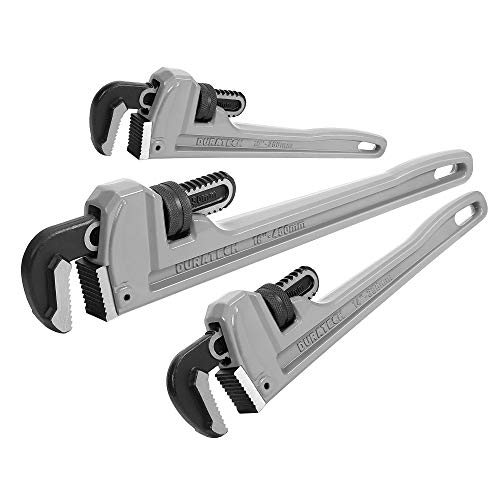
Table of Contents
- Models in this comparison
- Quick Verdict
- About Pipe Wrenches
- About Water Heaters
- A Note on the Comparison
- Factor 1: Purpose and Longevity
- Factor 2: Cost vs. Value Over Time
- Factor 3: Skill Level and DIY Capability
- Who Should Choose Pipe Wrenches?
- Who Should Choose Water Heaters?
- Our Verdict
- Frequently Asked Questions
- Sources & References
Models in this comparison
Affiliate disclosure: if you buy through these links, we may earn a commission at no extra cost to you.


Quick Verdict
Before we dive into the grit and steel, let's get one thing straight: we aren't comparing apples to oranges here. We're comparing a tool to an appliance. A pipe wrench is a fundamental hand tool used to tighten or loosen fittings, while a water heater is a complete system designed to provide hot water. You don't buy a wrench to replace a heater, and you don't buy a heater to fix a leak. However, if you're deciding where to put your hard-earned money in your 2026 maintenance budget, here is how you decide between upgrading your toolkit or replacing your unit.
Choose Pipe Wrenches if...
- You are building a professional-grade toolkit or upgrading from cheap, slipping imports.
- You need to handle residential repairs like tightening shut-off valves or freeing corroded fittings.
- You want tools that offer longevity, such as the RIDGID 31015 with its drop-forged steel and lifetime warranty.
- You need to balance weight and strength, such as choosing between heavy-duty iron for main lines or 40% lighter aluminum models for overhead work.
Choose Water Heaters if...
- Your current unit has failed, is leaking, or is no longer providing consistent hot water.
- You are performing a major home upgrade to improve efficiency or capacity.
- You need to solve an immediate household crisis where a tool alone cannot fix the lack of hot water.
- You are moving beyond simple repairs and into full-scale plumbing system replacement.
| Factor | Pipe Wrenches (The Tool) | Water Heaters (The System) |
|---|---|---|
| Comparison Scope | It is important to note that we are comparing a fundamental hand tool against a major household appliance. One is a component used to perform work, while the other is a complete mechanical system. You don't buy a wrench to replace a heater, but you might buy a wrench to fix one. | |
| Primary Purpose | Gripping, turning, and loosening threaded pipe fittings. | Heating and storing domestic water supply. |
| Investment Type | A one-time tool purchase for maintenance and installation. | A major capital expenditure for home infrastructure. |
| Installation Effort | Minimal; pick it up and start working. | High; requires plumbing, electrical, and often venting. |
| Lifespan Expects | Years of daily abuse (especially with brands like RIDGID). | Typically 8 to 15 years depending on water quality. |
| Failure Mode | Worn jaws, stripped threads, or broken handles. | Tank corrosion, heating element failure, or leaks. |
| The "Pro" Verdict | Essential for anyone touching a pipe. | Essential for anyone who needs a hot shower. |
About Pipe Wrenches
Listen, if you’re getting into the trade or just trying to keep your own house from flooding, a pipe wrench is the most fundamental tool you’ll own. It’s the difference between a quick fix and a stripped fitting that leaves you standing in a puddle. When you're looking at the market in 2026, you aren't just buying "a wrench"—you're choosing between weight, grip, and durability. A cheap, low-quality wrench will slip, round off your expensive fittings, or snap right when you're putting the muscle on it. You want something that grips without slipping and adjusts smoothly.
For most homeowners, the 12-inch RIDGID 31015 is considered the right starting point. It’s made of drop-forged steel and has a 1.5-inch capacity, which covers most residential fittings you'll run into. If you're working in tight spots where a full-sized wrench won't fit, the 10-inch RIDGID 31010 is your go-to for those cramped cabinets. For those who want to balance weight and strength, many experienced plumbers carry both iron and aluminum versions of the same size. For example, the RIDGID 31095 14-inch aluminum wrench is 40% lighter than its iron equivalent, making it a game-changer for overhead work or attic installs, though it may be slightly less rigid under extreme torque than the heavy-duty 2.5 lb iron models.
About Water Heaters
Now, comparing a pipe wrench to a water heater is like comparing a hammer to a house—one is a tool to fix a problem, and the other is a major appliance that solves a massive residential need. You can't use a wrench to heat your shower, and a water heater won't help you tighten a joint. However, from a budget and maintenance perspective, they represent two different types of investments. A high-quality wrench is a one-time purchase that lasts a lifetime, while a water heater is a major capital expense that eventually needs replacing.
When you're looking at water heaters, you're looking at capacity and power. For instance, models like the GE Appliances 18 Gallon Versatile Plug and Play or the VEVOR Electric Water Heater options provide different levels of volume and wattage to suit different household sizes. While a plumber uses a wrench to install or repair these units, the decision to buy a water heater is driven by household demand and energy needs. If you're choosing between the two in a budget crisis, remember: you buy the wrench to fix the heater, but you buy the heater to keep the family clean. One is a tool for the job; the other is the job itself.
A Note on the Comparison
Before we dive into the grit and gears, let's address the elephant in the room: comparing a pipe wrench to a water heater is like comparing a hammer to a house. One is a tool used to fix things, and the other is a major appliance that provides a service. You aren't going to use a 14-inch RIDGID to heat your morning coffee, and you certainly aren't going to install a GE Versatile Plug and Play with a 12-inch straight pipe wrench. However, if you're a homeowner staring at a budget, you might be deciding between investing in a professional-grade tool kit or tackling a major appliance replacement. One is a long-term investment in your ability to maintain your home; the other is a critical upgrade to your home's infrastructure.
Factor 1: Purpose and Longevity
A pipe wrench is a fundamental tool designed to survive decades of abuse. When you buy a quality wrench, like a RIDGID 31020 made of ductile iron, you are buying a tool that can be passed down to the next generation. It’s about grip, torque, and the ability to handle rusted fittings without slipping. A good wrench is a one-time purchase that solves a thousand different problems, from tightening a leaky shut-off valve to freeing a stuck hose bib.
A water heater, on the own, is a consumable piece of equipment. While a high-quality unit like a GE Appliances 18 Gallon Versatile or a VEVOR electric model provides essential hot water, it has a finite lifespan dictated by heating elements, tanks, and mineral buildup. While a wrench is an investment in your own capability, a water heater is an investment in your home's comfort. You buy the wrench to fix the leaks; you buy the water heater to stop the cold showers.
Factor 2: Cost vs. Value Over Time
When looking at the price tags, the difference is massive. A professional-grade 14-inch RIDGID wrench might cost around $42, while a budget-friendly IRWIN VISE-GRIP might sit around $22. These are manageable costs that provide immediate utility. The value here is found in the "tool life"—the ability to own the tool for twenty years without it failing you in the middle of a job. For a plumber or a handy homeowner, these tools pay for themselves every time they prevent a service call.
Water heaters represent a much higher capital expenditure. Whether you are looking at a VEVOR 12-gallon unit or a larger 18-gallon tank, you are looking at hundreds of dollars. The value of a water heater isn't measured in "torque" but in gallons per minute and reliability. While a cheap wrench might strip a fitting and cost you money in repairs, a cheap water heater might cause a flood in your basement. The stakes are higher with the appliance, but the tool is what gives you the power to manage the appliance.
Factor 3: Skill Level and DIY Capability
Owning the right pipe wrenches expands your DIY ceiling. If you own a 12-inch RIDGID 31015, you have the capacity to handle most residential fittings with ease. Having a variety of sizes—like a 10-inch model for tight spaces or an aluminum version for overhead work—means you can tackle more complex plumbing tasks yourself. The tool is an enabler of skill.
The water heater is often the "endgame" of a DIY project. While some electric models like the GE Versatile Plug and Play are designed for easier installation, a water heater installation often requires a level of technical knowledge (and often a permit) that goes beyond simple tool work. You use the wrenches to perform the maintenance, but the water heater is the reason you need the tools in the first place. One is the means, and the other is the end goal.
Who Should Choose Pipe Wrenches?
Before we get into the weeds, let's address the elephant in the room: comparing a tool to an appliance is like comparing a hammer to a house. One is a component used to fix things; the other is a major system installation. If you are looking at this comparison, you are likely deciding between investing in professional-grade tools or tackling a major household upgrade. If you're looking for the tool, you're looking for the ability to do the work.
You should choose a high-quality pipe wrench if you are a homeowner looking to handle your own repairs, an apprentice starting your kit, or a pro looking to refresh your truck. A solid wrench is the difference between a quick fix and a stripped fitting that ruins a whole afternoon. For example, if you're dealing with tight residential spaces, a compact 10-inch model like the RIDGID 31010 is essential because larger wrenches simply won't fit. If you're doing overhead work in an attic, you'll want the lightweight aluminum options, like the RIDGID 31095, which is 40% lighter than its iron counterparts to save your back. For most homeowners, a 12-inch RIDGID 31015 is the right starting point because its drop-forged steel construction and 1.5-inch capacity cover most residential fittings.
Who Should Choose Water Heaters?
You should choose a water heater if you are facing a critical system failure or a planned home upgrade. Unlike a wrench, which is a one-time purchase to enable work, a water heater is a major capital expense and a vital piece of home infrastructure. You aren't buying a water heater to "do" something; you're buying it because you need hot water to live a civilized life.
If your current tank is leaking, rusted through, or simply too small for your family, you are in the market for a replacement. You'll be choosing between different capacities—like 12-gallon or 18-gallon models—and different technologies, such as electric tank-style heaters or plug-and-play models, depending on your existing plumbing setup and household needs. While a wrench helps you fix a leak, a water heater solves the problem of the source itself. If you're deciding between these two categories, remember: buy the tools to enable the work, but buy the water heater to solve the crisis.
Our Verdict
Look, comparing a pipe wrench to a water heater is like comparing a hammer to a house. They aren't even in the same league. One is a tool you use to fix things, and the other is the heavy appliance you're likely trying to install or replace. If you're standing in a hardware aisle wondering which one to buy, you've clearly own a problem you haven't identified yet. But since you're asking, let's get real about how you should spend your money in 2026.
If you are looking to build a toolkit that won't fail you when a pipe bursts at 3 AM, you buy the pipe wrenches. A quality wrench is a fundamental necessity. For most residential jobs, you shouldn't just buy one; you should own two. A 12-inch RIDGID 31015 is the perfect starting point for most homeowners because its drop-forged steel and 1.5-inch capacity cover the majority of residential fittings. If you're doing overhead work or attic installs, grab an aluminum version like the RIDGID 31095 to save your back—it's 40% lighter than the iron models while keeping those hardened steel jaws. Don't skimp on the cheap, unbranded junk; buy tools that earn their keep.
If you are looking to solve a lack of hot water, you buy the water heater. This is a major capital expense, not a tool purchase. You buy a water heater when your current tank has given up the ghost or you're upgrading to a higher capacity. While a wrench is a one-time investment that lasts decades, a water heater is a piece of equipment with a finite lifespan.
The Bottom Line: If you have no tools, buy the wrenches first. You can't install a new water heater if you don't have the tools to hook up the lines. If your water is cold, buy the water heater. But if you're looking for a professional-grade foundation, start with the RIDGID iron or aluminum sets and build your kit from there.
Frequently Asked Questions
What size pipe wrench does a typical homeowner need?
For most residential tasks, a 12-inch wrench is the right starting point. According to PlumbingToolsReview, the 12-inch RIDGID 31015 is an ideal choice because its drop-forged steel construction and 1.5-inch capacity cover most residential fittings. A common professional strategy is to own two different sizes rather than just one to handle various tasks.
Are aluminum pipe wrenches as durable as cast iron ones?
It depends on the job. The RIDGID 31095 aluminum wrench is 40% lighter than its iron equivalent, making it a game-changer for overhead work or attic installs. While the aluminum body might be slightly less rigid under extreme torque compared to iron, the hardened steel jaws ensure it grips just as well. For 95% of residential work, you won't notice the difference, but you shouldn't use aluminum models as a hammer.
What is the difference between a heavy-duty iron wrench and a lightweight aluminum one?
It comes down to weight versus rigidity. A heavy-duty ductile iron wrench, like the 14-inch RIDGID 31020, provides maximum strength and is virtually indestructible, but it weighs about 2.5 lbs. An aluminum version offers significant weight savings for all-day use, though it may have slightly less rigidity under maximum torque compared to the iron version.
Why would I choose a 10-inch wrench over a larger size?
Sometimes you can't fit a massive wrench into a tight space. The 10-inch models are specifically designed for use in cramped areas where larger wrenches simply won't fit. Having a compact option in your kit ensures you aren't stuck when working in tight cabinets or between studs.


